Sunday, October 23, 2016

How much 'stuff' does one need, to be fulfilled?

I ran across this article the other day, and now am looking forward to seeing the movie.  It's about a man who, following a relationship break-up, decides to give up his worldly possessions.  He films the process, for a year, and creates a documentary.  Here is a link to the article:  documentary about giving up ones' possessions
One example of a tiny house


When I moved to Denmark four years ago, I originally decided that I was going to bring most of my belongings.  However, when I looked at some quotes for moving expenses, it became clear that it was entirely cost prohibitive.  Most people who move their belongings (i..e., furniture) overseas are either wealthy or have a company paying for the move.  It dawned on me that I was really going to have to be selective about what I brought over here, from the States.  Week, after week, I got rid of things.  They were either sold on Craigslist (the American version of Den BlĂ„ Avis), given away, recycled, or thrown away. What followed was a deep sense of relief; even without my belongings (including a car, which I sold), I could be and would be just fine.

I became interested in the tiny house movement, and, to this day, my retirement plans are to live tiny, half time, somewhere in the US desert.

Feel free to share your thoughts about how owning 'stuff' relates, or doesn't relate to happiness. Enjoy the attached article.

Tuesday, October 18, 2016

When your partner comes from another country...

Many of my clients are non-Danes married to Danes.  Here is a fun and insightful article about choosing to marry someone from a different culture.
New York Times article-- foreign spouse

Sunday, October 2, 2016

Coping with the sexual side effects of antidepressant medication

I remember when Prozac first came out, in the late 1980s.  It was marketed as a kind of miracle cure for depression, and was considered a preferable alternative to the then MAO-inhibitors and Tricyclics that were being prescribed at the time.  Prozac was marketed as having almost no side-effects, which was in stark contrast to the available drugs for treating mood disorders. Soon after doctors started prescribing Prozac,  we began to get complaints from patients about their ability to orgasm and sometimes their ability to experience sexual desire.  We were so enamored with this miracle drug that I think we often were unempathetic to our clients' concerns because, wouldn't everyone rather feel happy than be able to have an orgasm?  Since then, our notions about the importance of sexuality have evolved.  Also, the number of SSRIs on the market has increased and some atypical antidepressants (i.e., Wellbutrin) have been introduced that have been shown to be effective.  Clients who have sexual side-effects on one medication can be tried on a variety of medications until they find one that helps them but produces the least number of side-effects
.
I want to mention however, that while I sympathize with people who have sexual side effects, it is nearly always helpful for individuals to attempt to define sex in the broadest possible manner.  When one defines sex in the most heteronormative (i.e., penile-vaginal, penetrative, leading to orgasm) fashion, it can create unrealistic expectations.  Many of us will, at some point in our life, be on a medication that affects our sex drive, become disabled, and/or we will ALL age.  Our ability to be broad minded and adventurous regarding sex will help us have healthy sexual lives throughout the years to come, no matter the condition of our biology and body.

Here's a helpful article about this topic from buzzfeed: Click here


Friday, September 23, 2016

Another article about authentic self

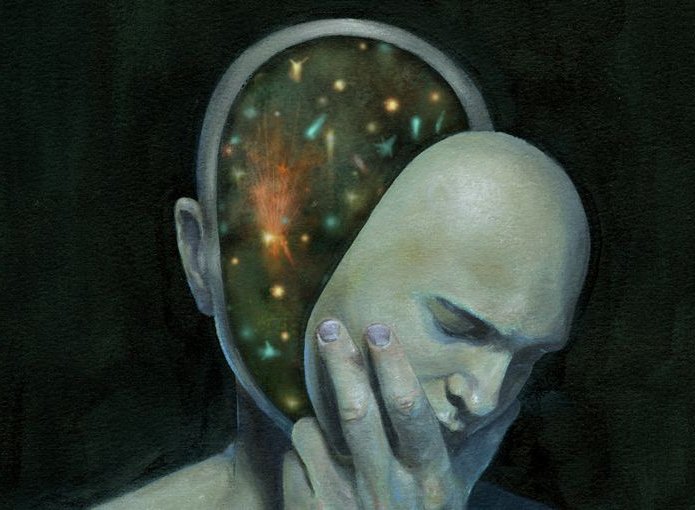
Several famous psychologists have written about the existence of an 'authentic self'.  Notably, Carl Rogers used this term as marker for when one has achieved psychological health.  Donald Winnicott also spoke of the 'true self/false self' dilemma.  He believed that 'true self' actually produces a feeling for people-- a sense of rightness, or 'this is me'.  Something about this notion has always attracted me, both as a person and as a psychologist.  Many of my overachieving clients seem to be struggling with being themselves, in a world replete with social norms and customs that can feel impossible to meet.  In Denmark, the pressure for a couple (straight, gay or otherwise) to have a baby in their thirties, complete with a monster-pram, is something that I have noticed taking a toll on many people in my practice.  I'm sure you can think of many unspoken rules and norms in society that also pressure people to be someone other than their authentic self.

I ran across the following article that looks at modern day pressures young people face.  Enjoy.
False Self Syndrome

Wednesday, September 21, 2016

Predicting suicidality using technology

For a long time, researchers knocked Freud's idea of the unconscious because it could not be 'proven'.  However, today, technology makes it possibly for us to quantifiably measure response time to certain associations as a way to determine biases about which a person might not be 100 percent conscious.  A test has been created to examine just this phenomenon.  It's called the Implicit Associations Test and it was developed at Harvard.   Click here to take it and get a better understanding of how it works.

Scientists have developed similar measures to determine if one is suicidal.  Frequently, suicidal people won't admit to being suicidal and thus this kind of measure is very important.  I ran across this article today and thought I would share it, here.  Some of you know that I am an huge techno geek, and applications such as the one described in this article are one way in which technological innovation can be used with psychiatric patients.

http://www.pbs.org/newshour/bb/can-technology-help-predict-will-attempt-suicide/

The presence of dogs in the therapy office

Esther
A couple of years ago, we purchased a beagle mix from a nearby kennel.  After reading a lot of information about therapy dogs, I decided to see what kinds of programs were available in English, in Denmark.  I was unable to find anything so I read up about the mere presence of animals in the therapy session.  Not surprisingly, there is a wealth of data about the calming effects of animals.  With the goal of bringing 'Esther' to work, I began training her.  I also took here everywhere-- trains, busses, and my classroom where I teach.   My goal was to get her acclimated to many different sounds, sights, and types of people.  Today, at 2-years old, she is a surprisingly calm dog, and I have ventured into bringing her into the therapy office.  My clients have, for the most part, been appreciative.

Feel free to say how you would feel if there was a dog in your therapy!

Here is a link from someone who researcher this exact issue.  Enjoy!

https://www.psychologytoday.com/blog/decoding-your-pet/201501/what-if-your-therapist-had-dog-in-the-office

For those suffering from anxiety...

Most people have suffered from stress and anxiety, at some point in their lives.  I ran across this article today and decided to share it.


http://www.latina.com/lifestyle/health/anxiety-facts-symptoms